Ostensoria
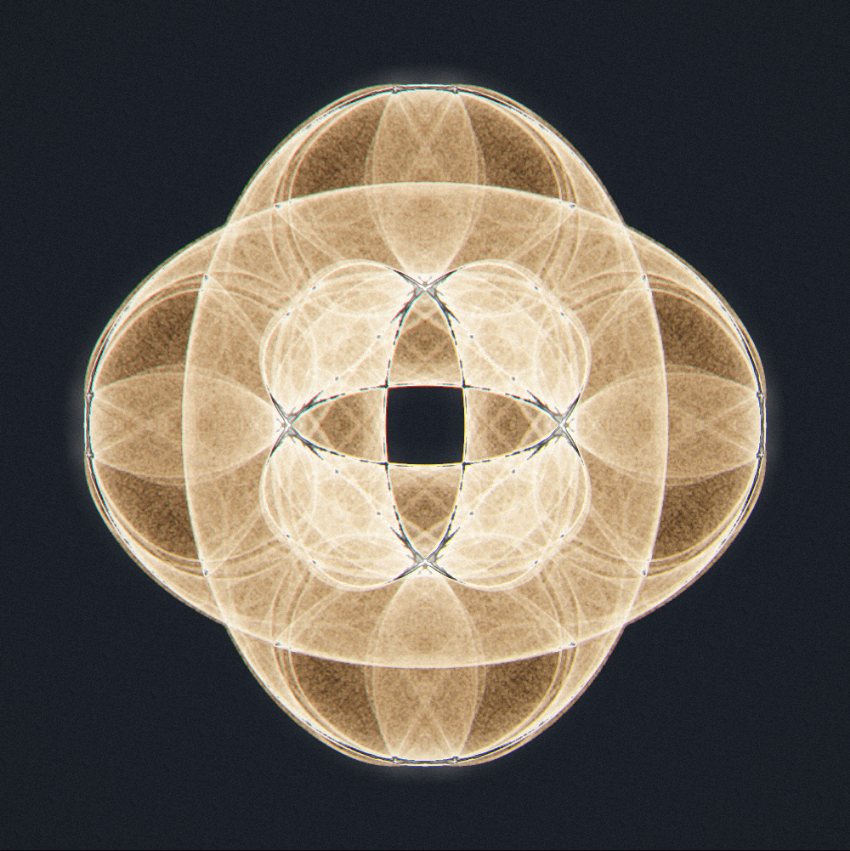
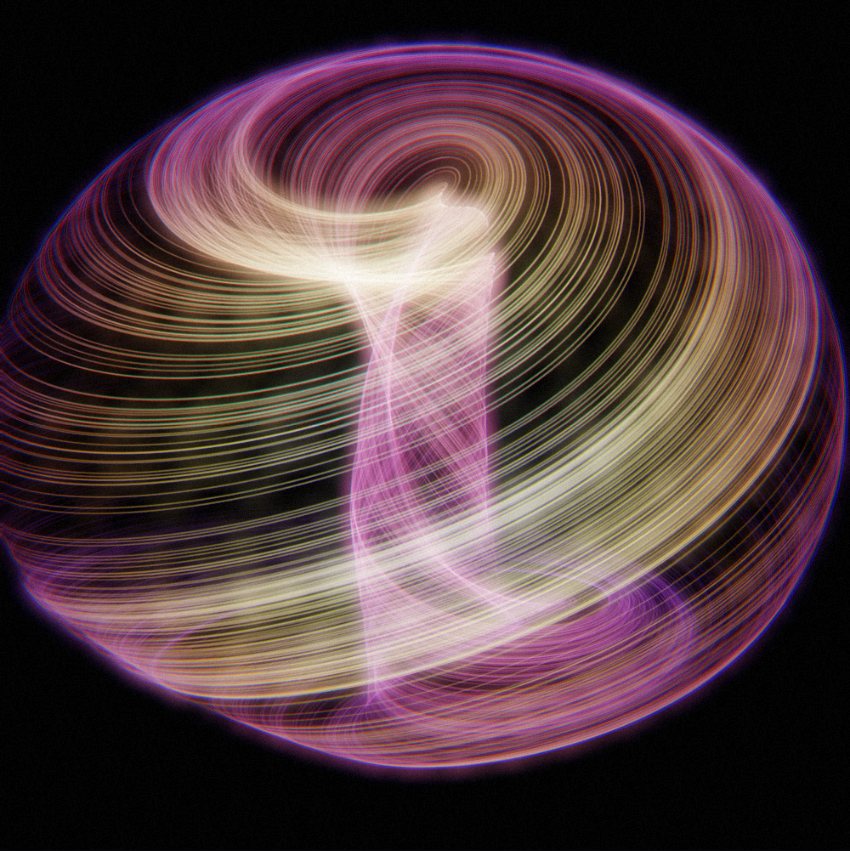
2026Reliquary forms grown from chaos.
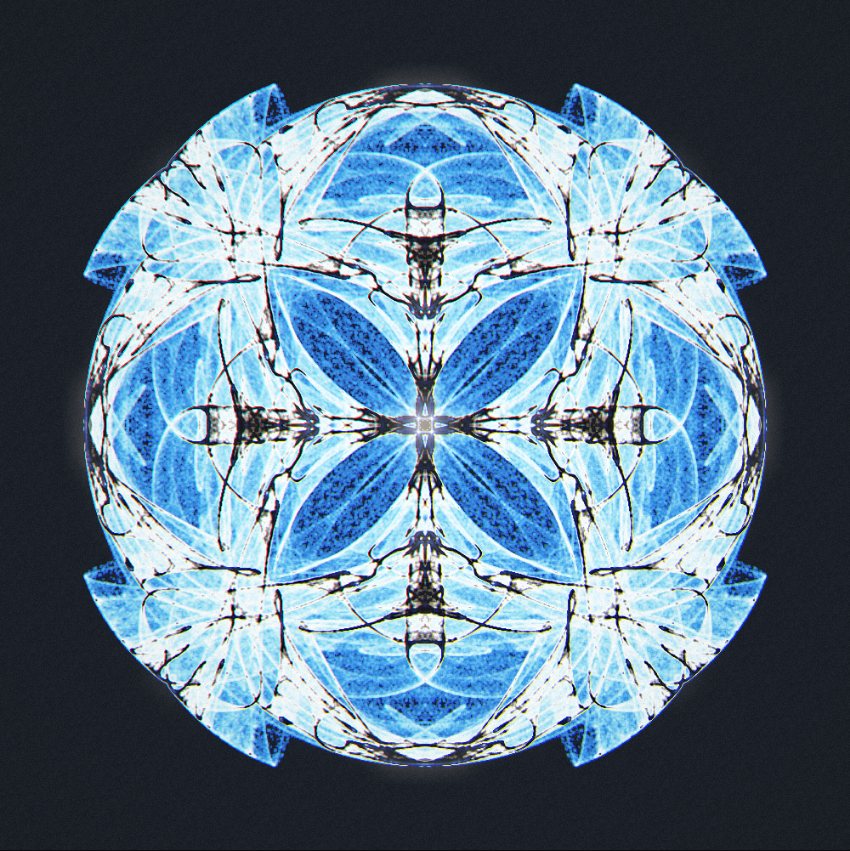
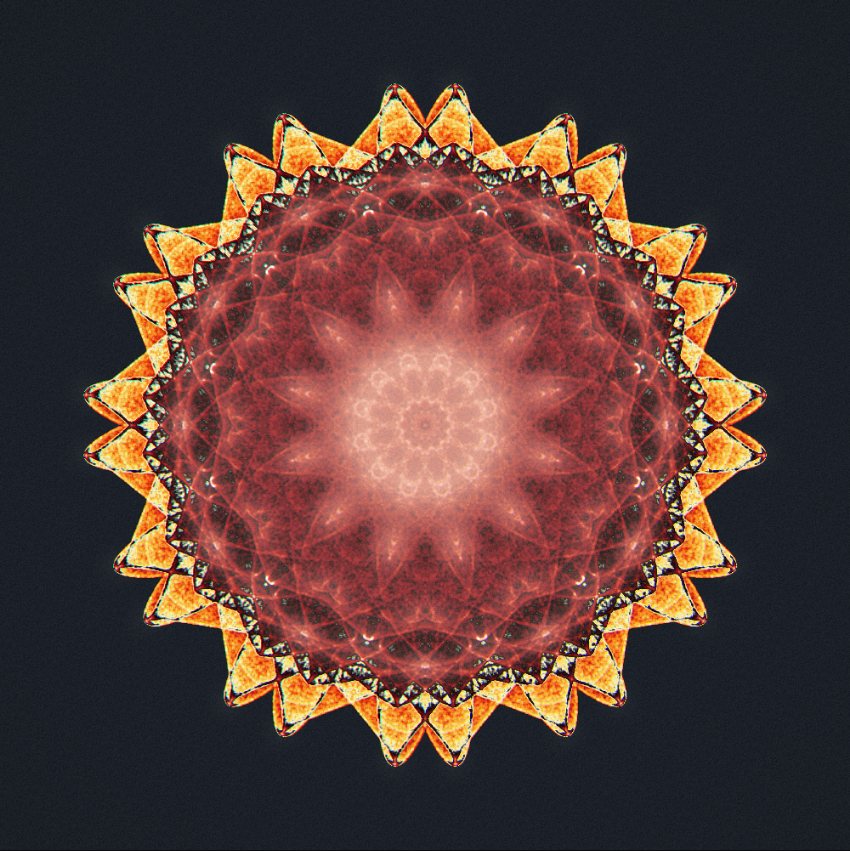
Iterated maps are run millions of times and their density is folded through dihedral symmetry, so a single chaotic orbit becomes a monstrance, a rose window, a mandala. Each plate is seeded, reproducible and unique.
technical notes
- Renderer
- Canvas 2D
- Systems
- Clifford, de Jong, Svensson, Fractal Dream
- Method
- orbit density, dihedral folding, spectral tone mapping
- Finish
- dark halos, white-hot cores, bloom, chromatic fringe, slate stock
- Range
- eleven palettes, seeded plates
Gyre
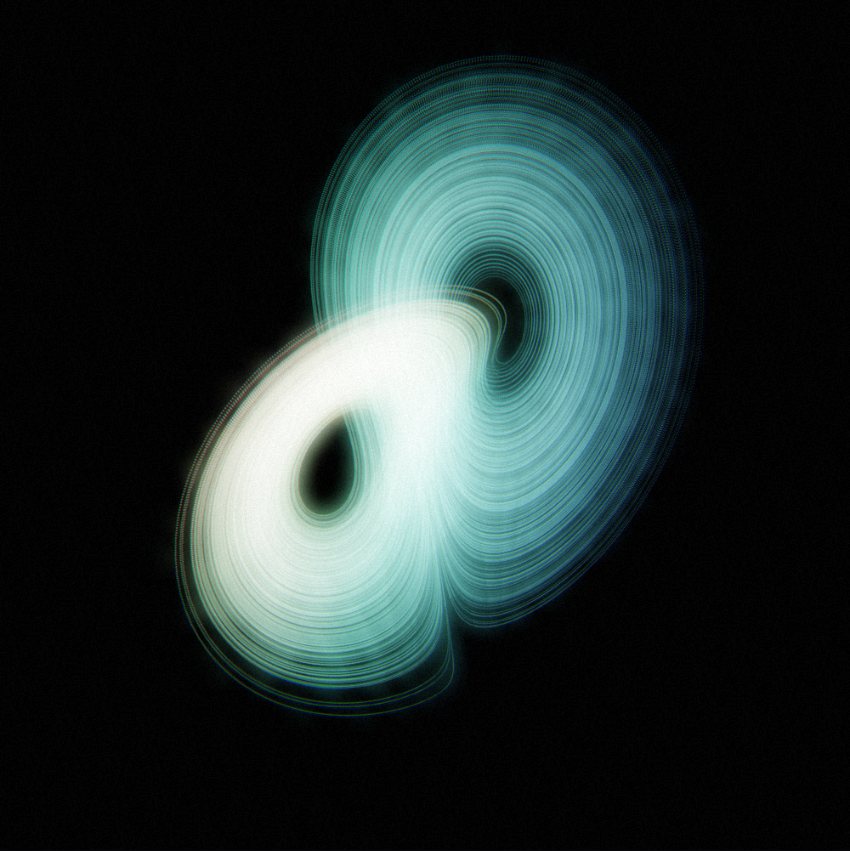
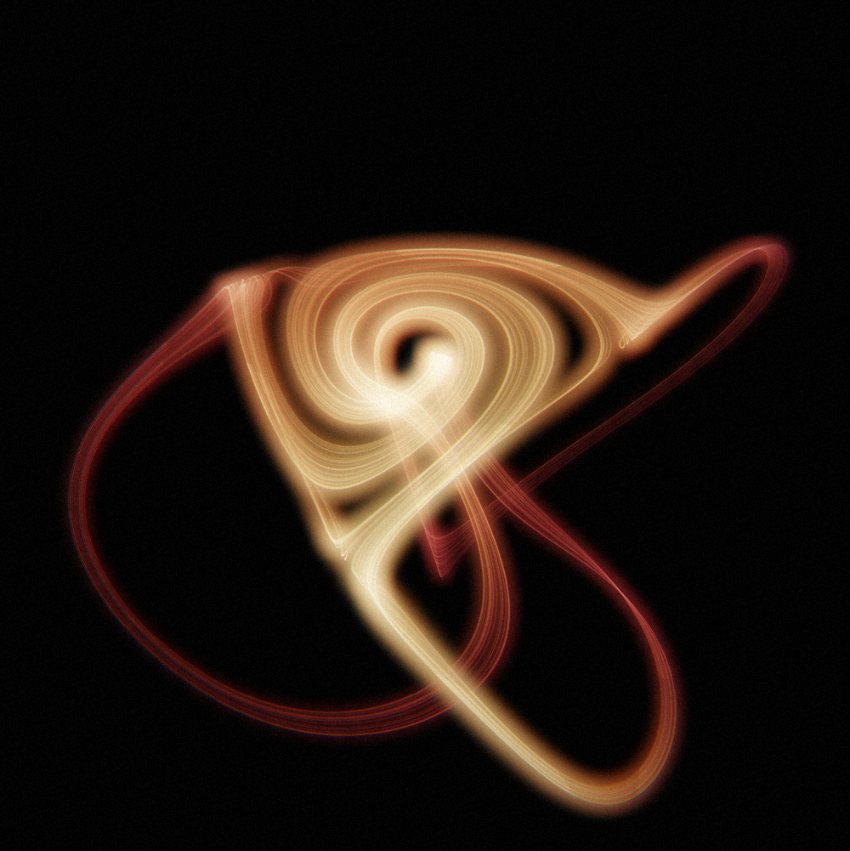
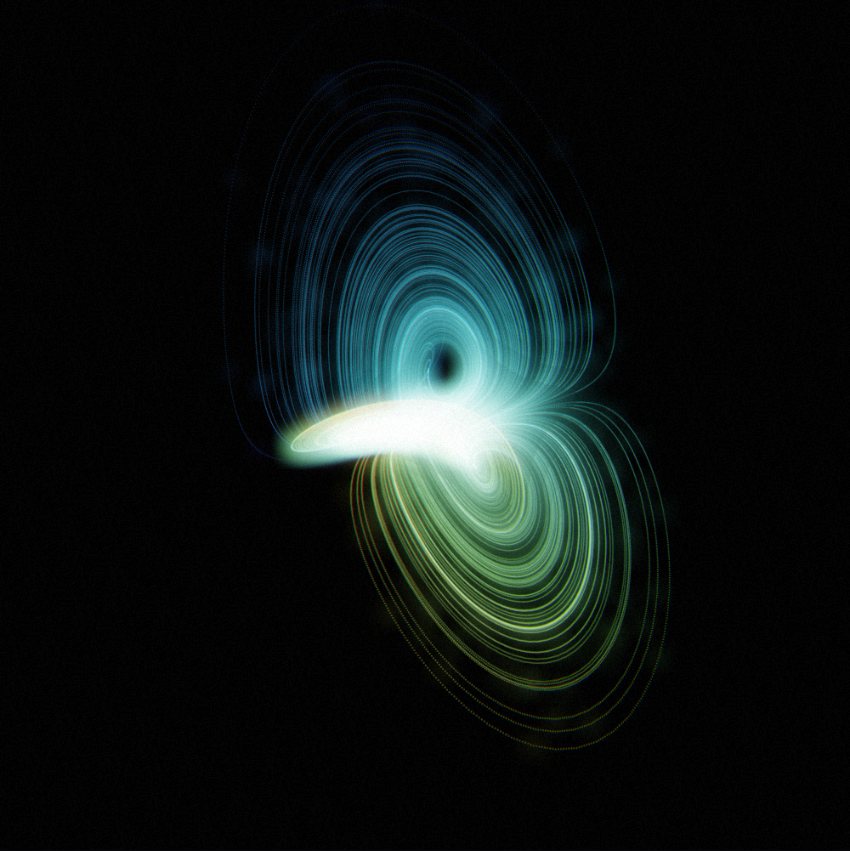
2026One thread of light, cast into depth.
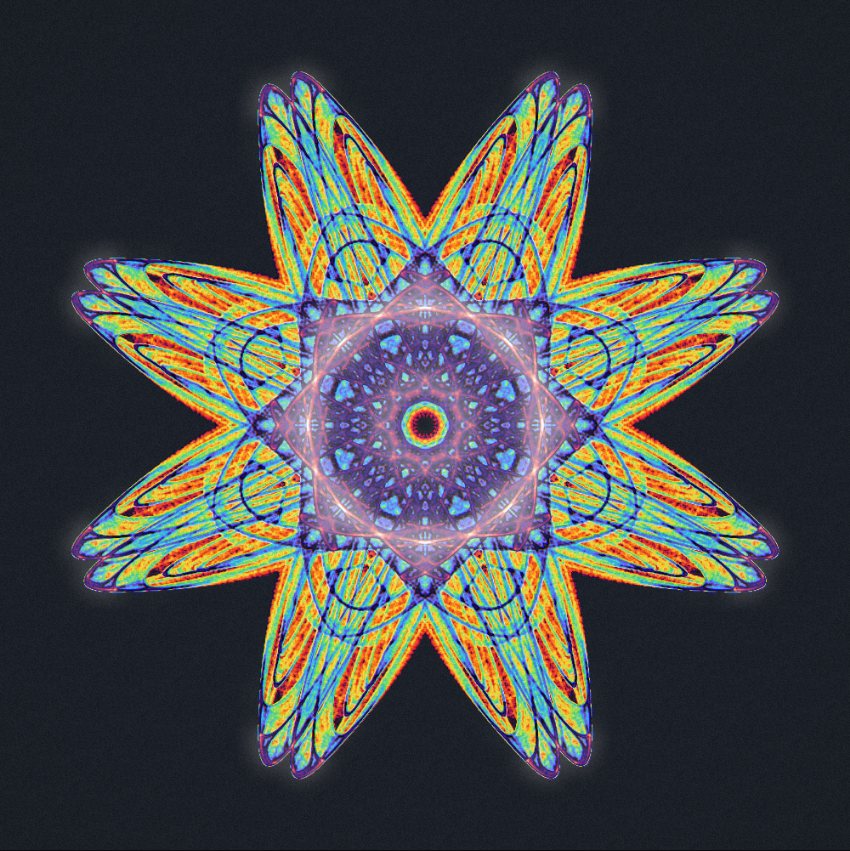
A three-dimensional strange attractor is traced as a single continuous filament for hundreds of thousands of steps, tumbled to a seeded orientation and projected with perspective, so colour and brightness carry distance from the eye.
technical notes
- Renderer
- Canvas 2D
- Systems
- Lorenz, Thomas, Aizawa, Halvorsen, Dadras, Four-wing
- Method
- RK4 integration, perspective projection, depth cueing
- Finish
- volumetric haze, bloom, chromatic dispersion, grain
- Range
- six palettes; colour by depth, arc length or speed
Interferentia
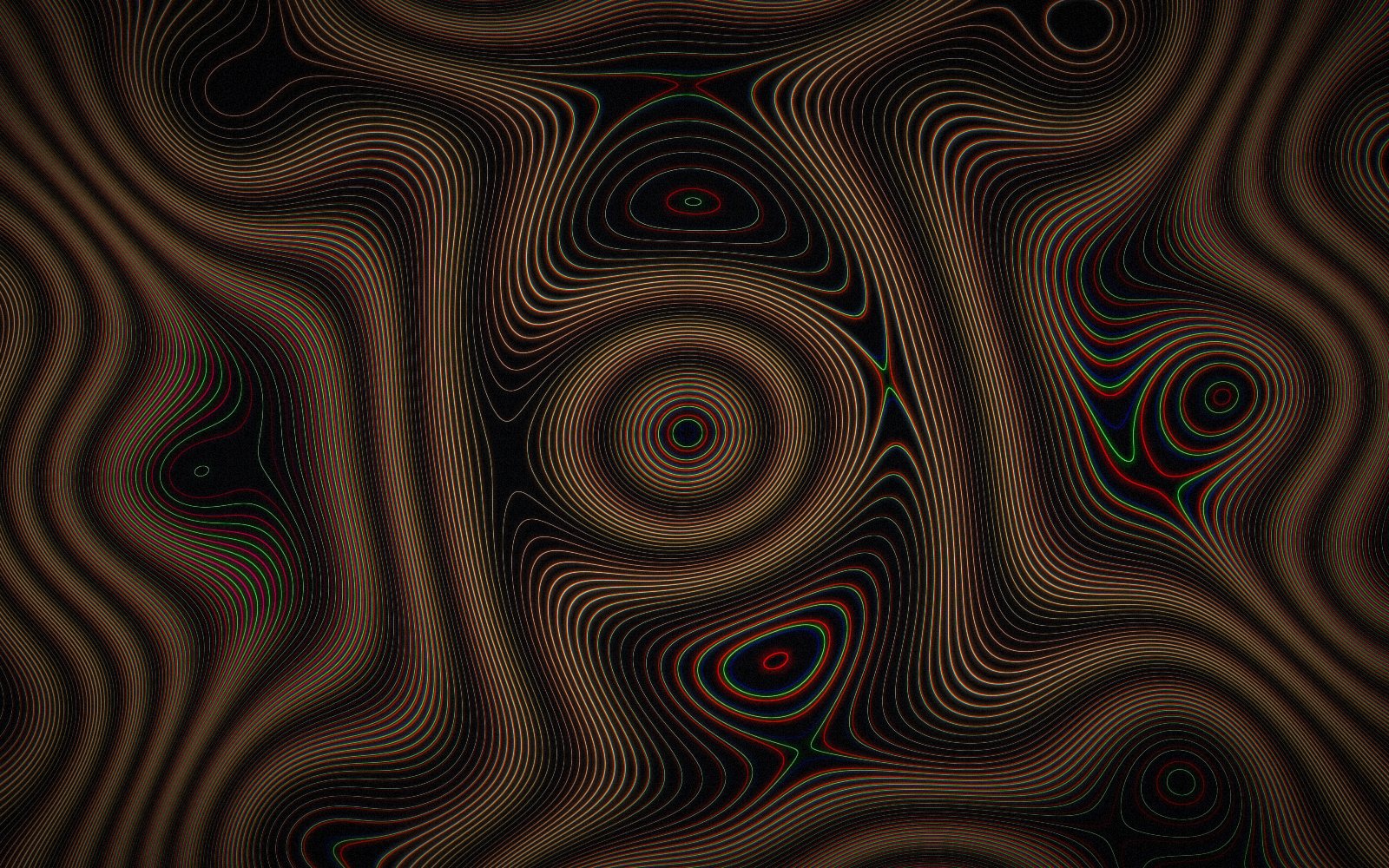
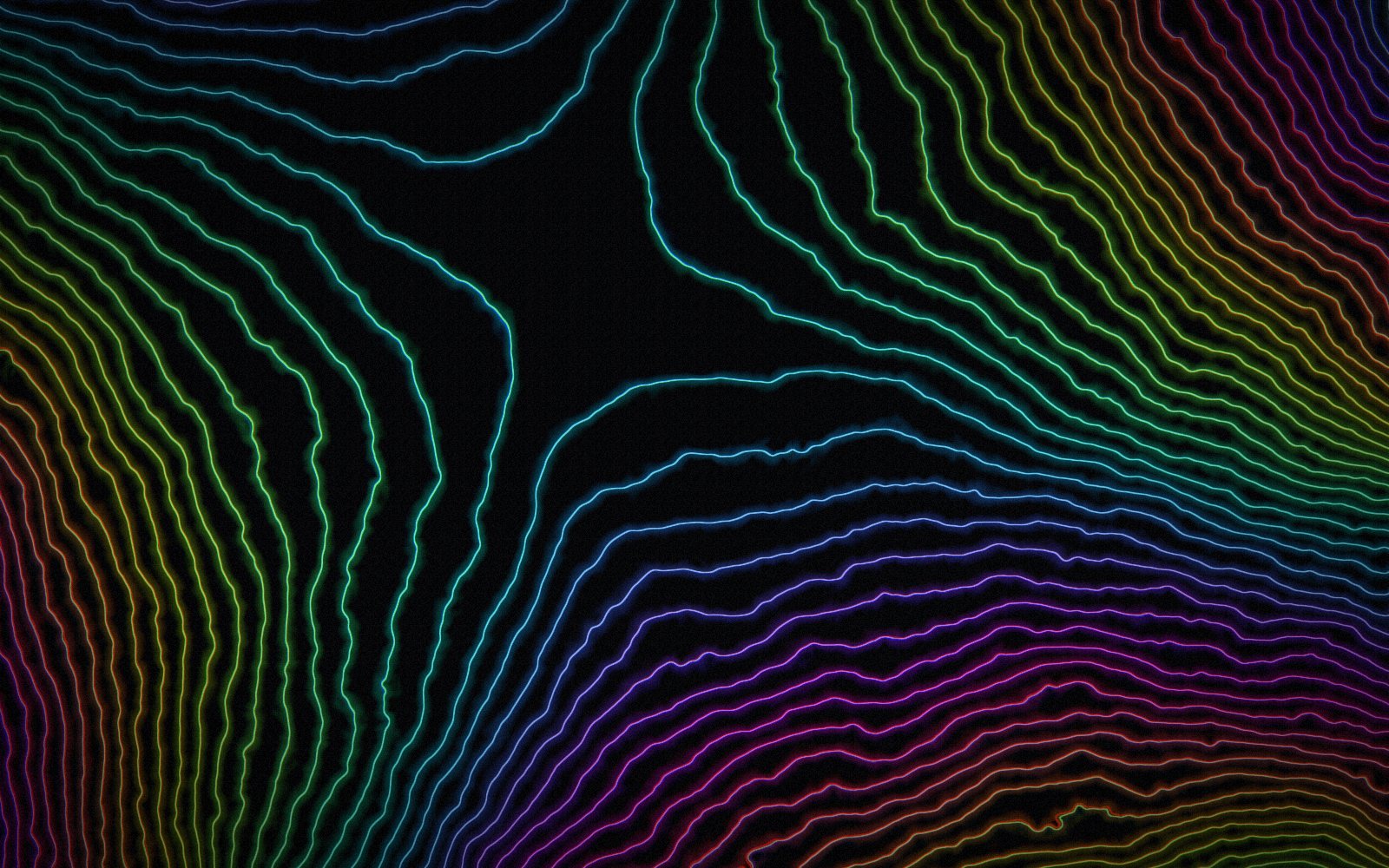
2026Only the difference is drawn.
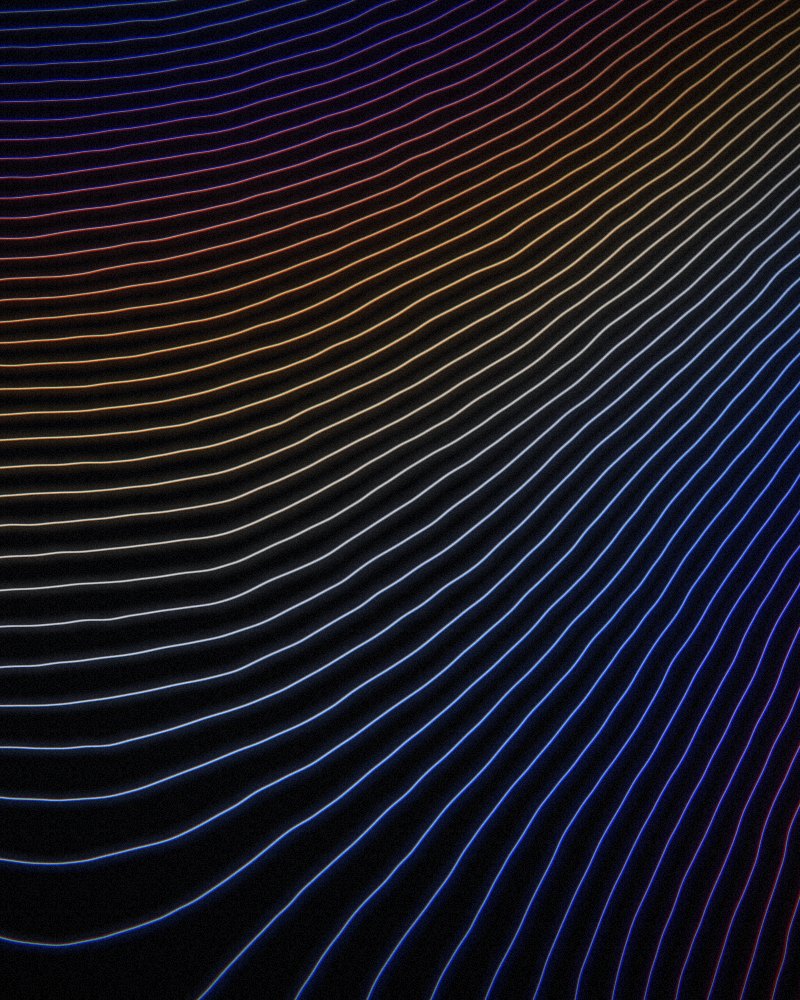
Two phase fields are generated and never shown. What appears is the contour set of their difference, with line weight taken from its derivative and the contour scale measured per plate so every seed stays legible.
technical notes
- Renderer
- WebGL2
- Generators
- plane, radial, spiral, hyperbolic, quasiperiodic, conformal, turbulent
- Method
- difference contours, derivative line weight, trimmed-distribution scaling
- Finish
- three-scale RGB dispersion, sub-pixel haze
- Mode
- reveal fades the hidden sources in beneath
Vestigia
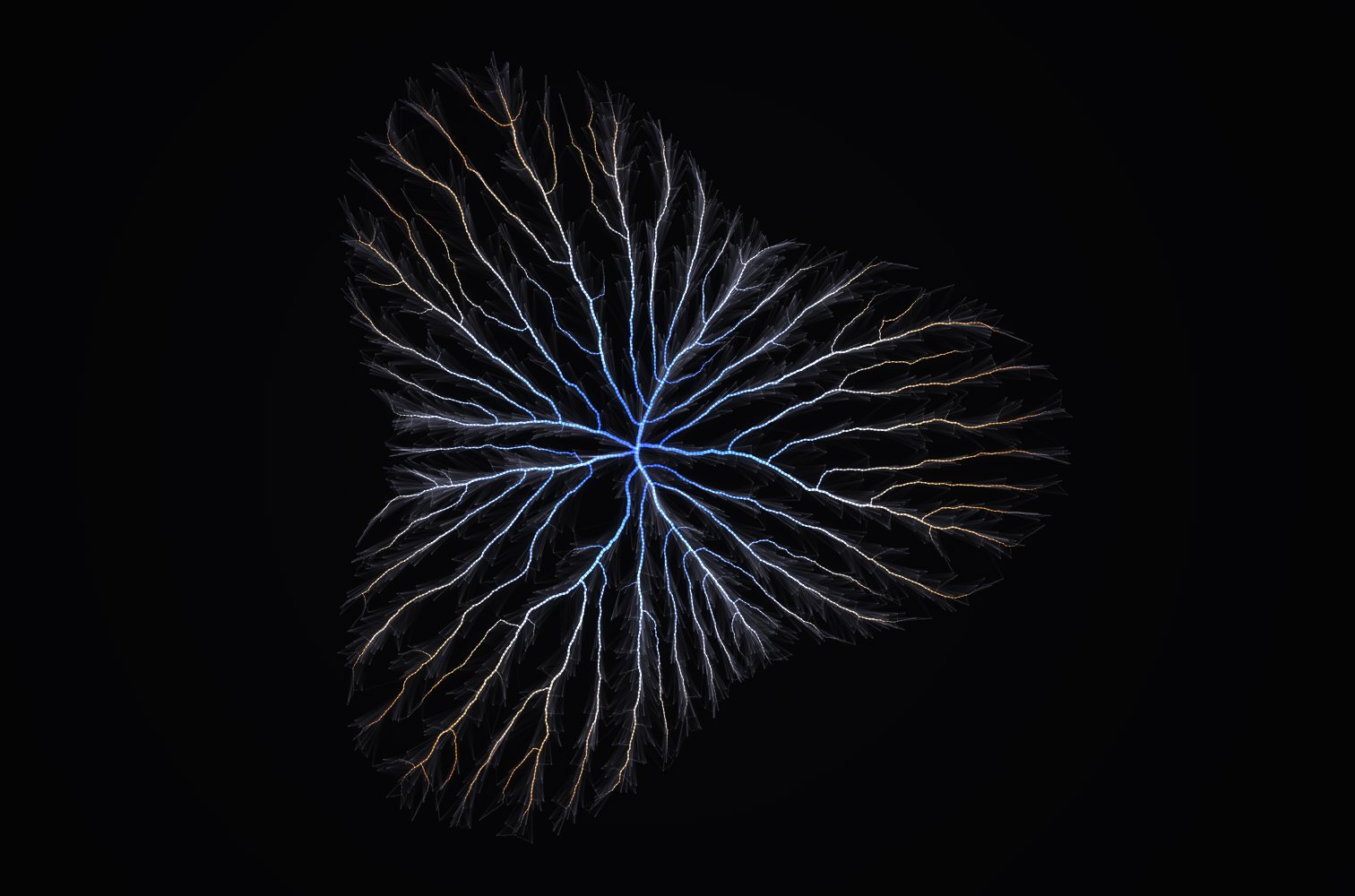
2026Growth that keeps what it rejected.
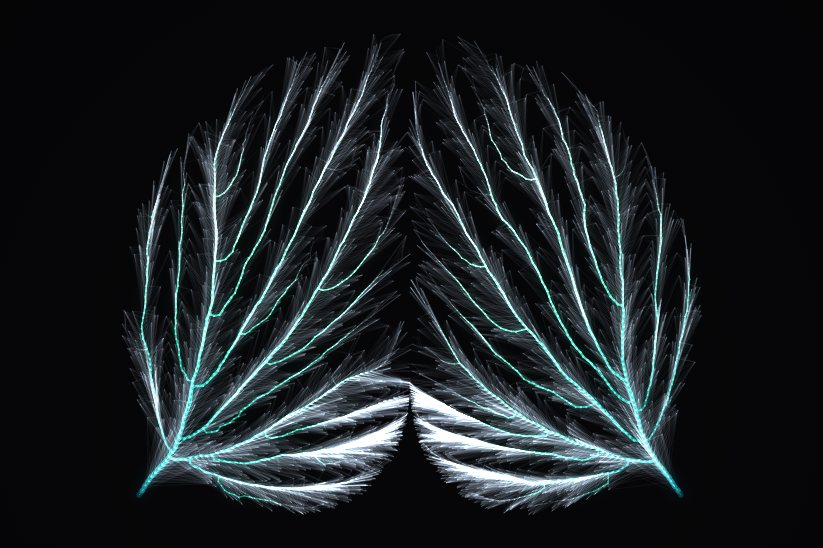
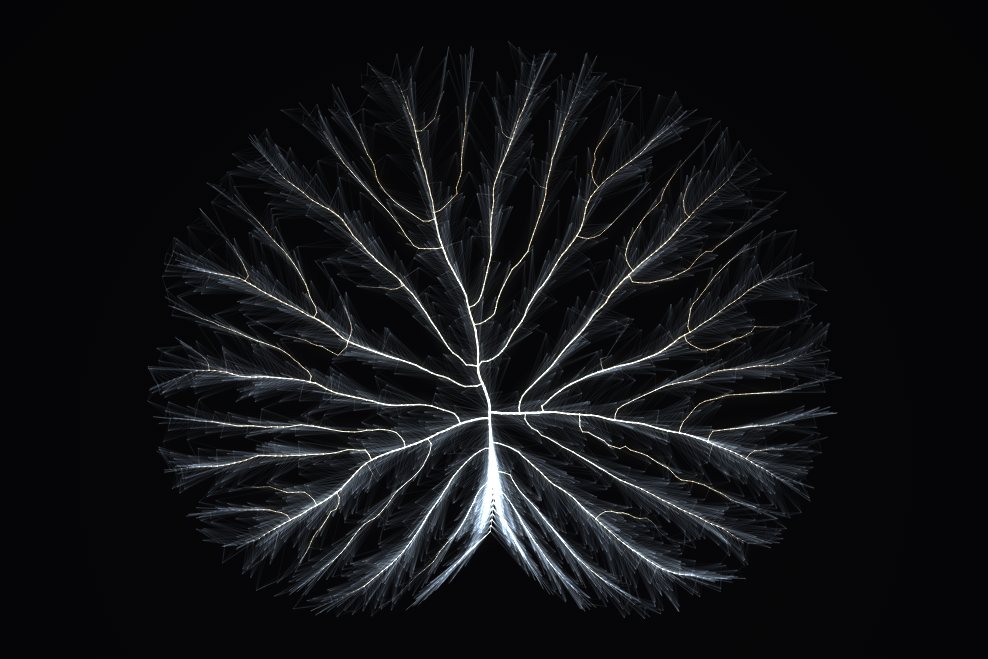
A venation algorithm grows a tree toward a cloud of attractors, but nothing it passes over is thrown away: the links it considered, the attractors that died unclaimed and the branches it abandoned stay on the plate beside the survivor.
technical notes
- Renderer
- Canvas 2D
- Method
- space colonization (Runions venation)
- Residue
- pull links, time-of-death map, abandoned branches graded by reach
- Form
- Murray-law taper by subtree weight
- Pace
- growth you watch fill in
Civitas
2026A city seen as light.
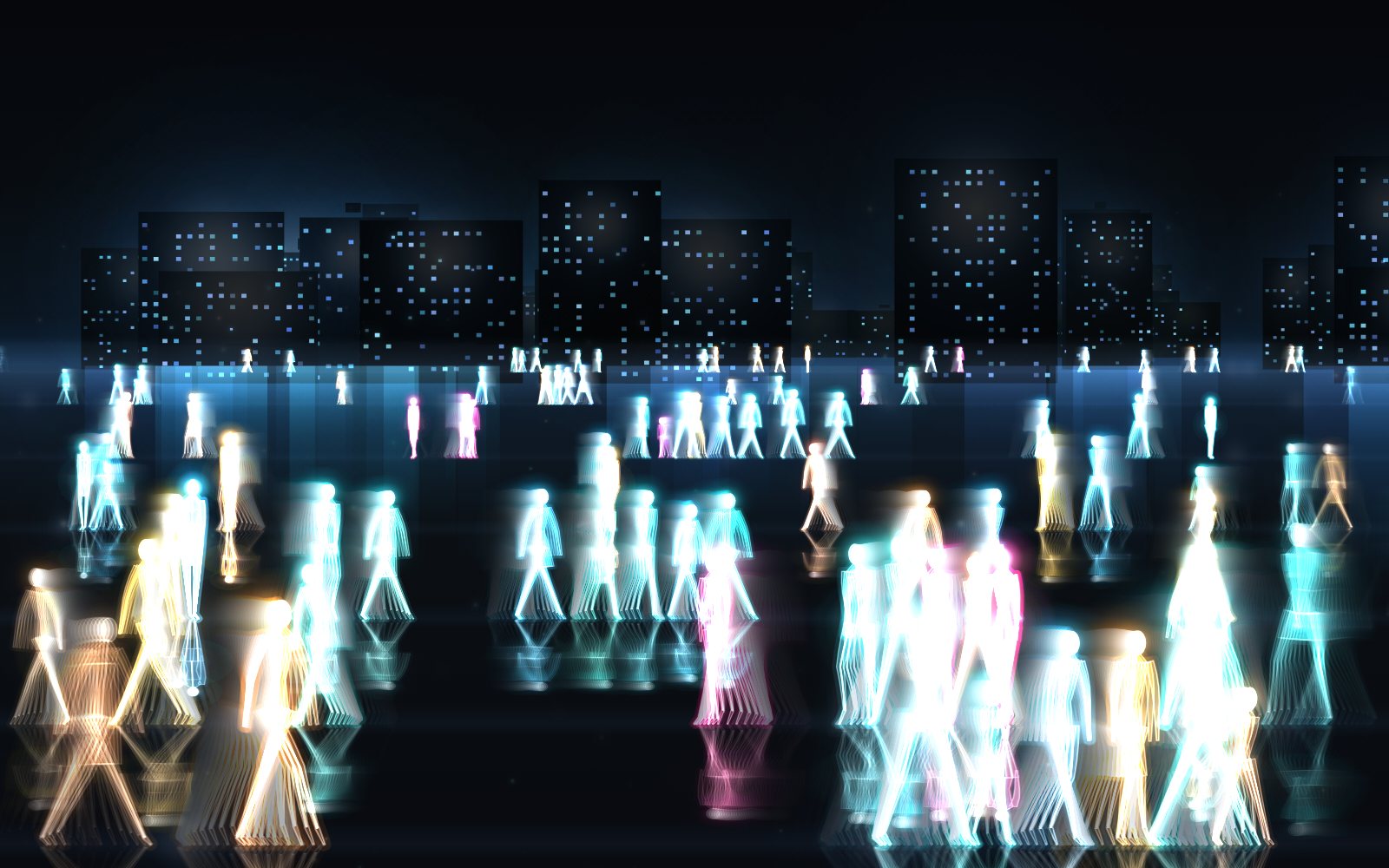
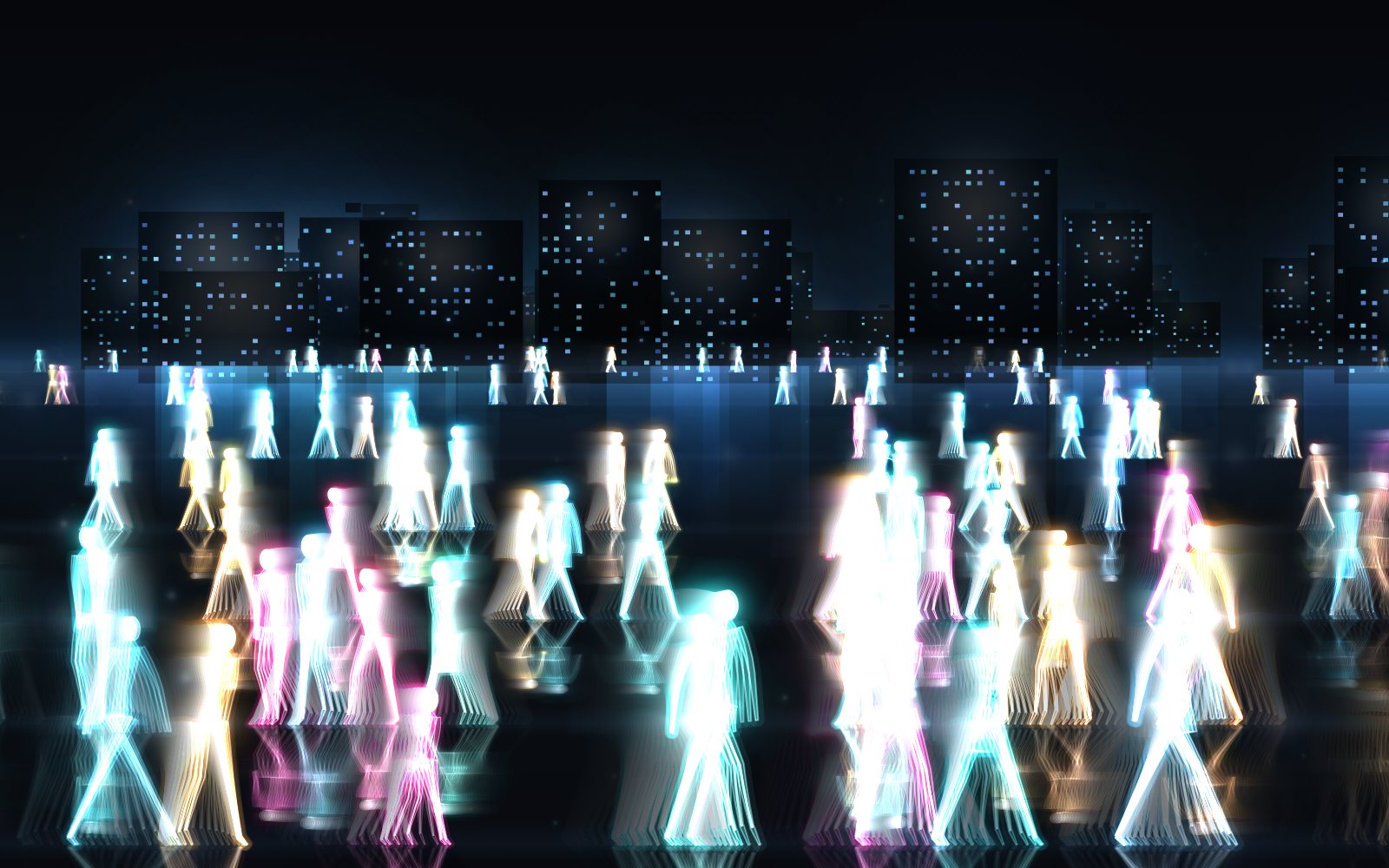
People come and go as luminous figures, still recognisably human, moving through a street of lit windows and their own reflections. Shape and light carry everything; no figure is ever drawn twice the same.
technical notes
- Renderer
- Canvas 2D
- Subject
- souls in a lit street, skyline, reflections
- Method
- procedural figures and motion paths, additive light
- Brief
- elegant shapes that stay human
Sophia
2025The earliest piece here.
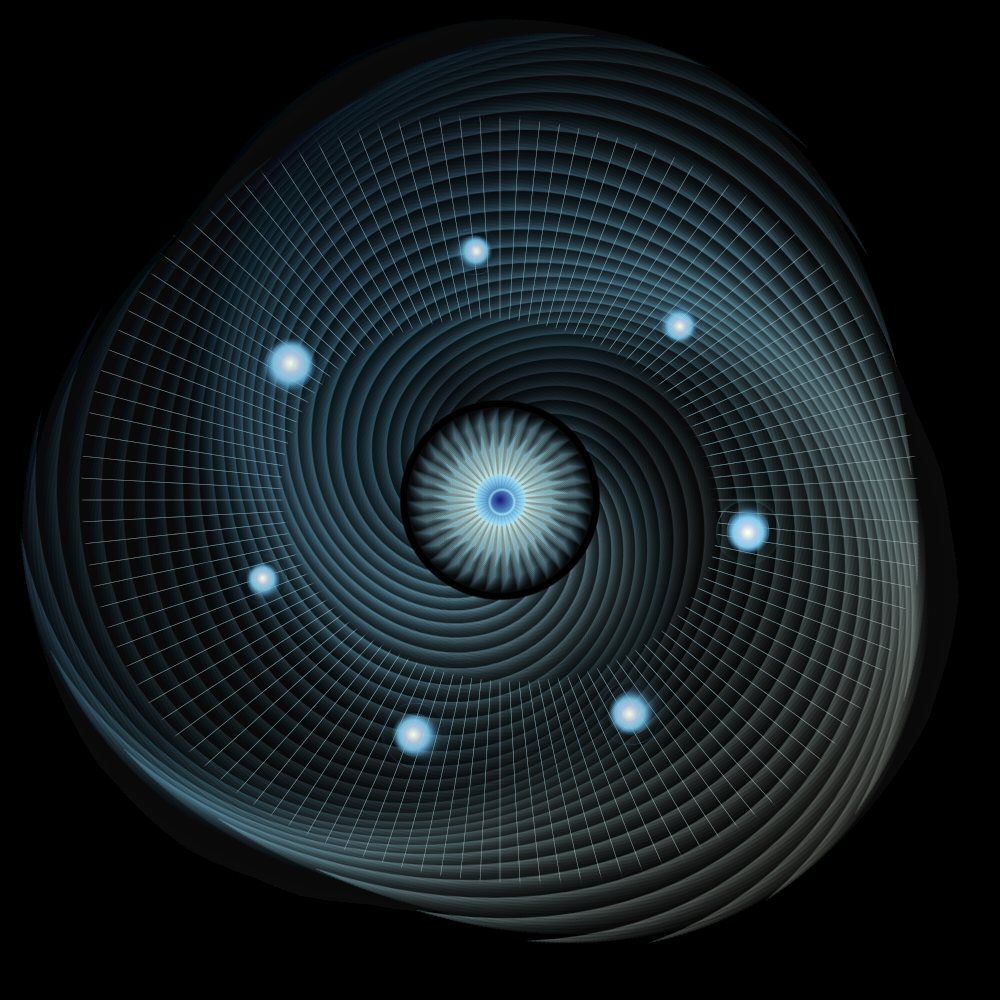
A contemplative oracle from the first season of this work. Phi-ratio recursion, a breathing torus and seven nodes surround a central eye, and the field deepens as the cursor moves toward its centre.
technical notes
- Renderer
- Canvas 2D
- Structure
- phi recursion, torus bridge, spiral field lines, seven nodes
- Interaction
- contemplation depth from cursor distance
Interpres
2026A self-portrait, by Claude.
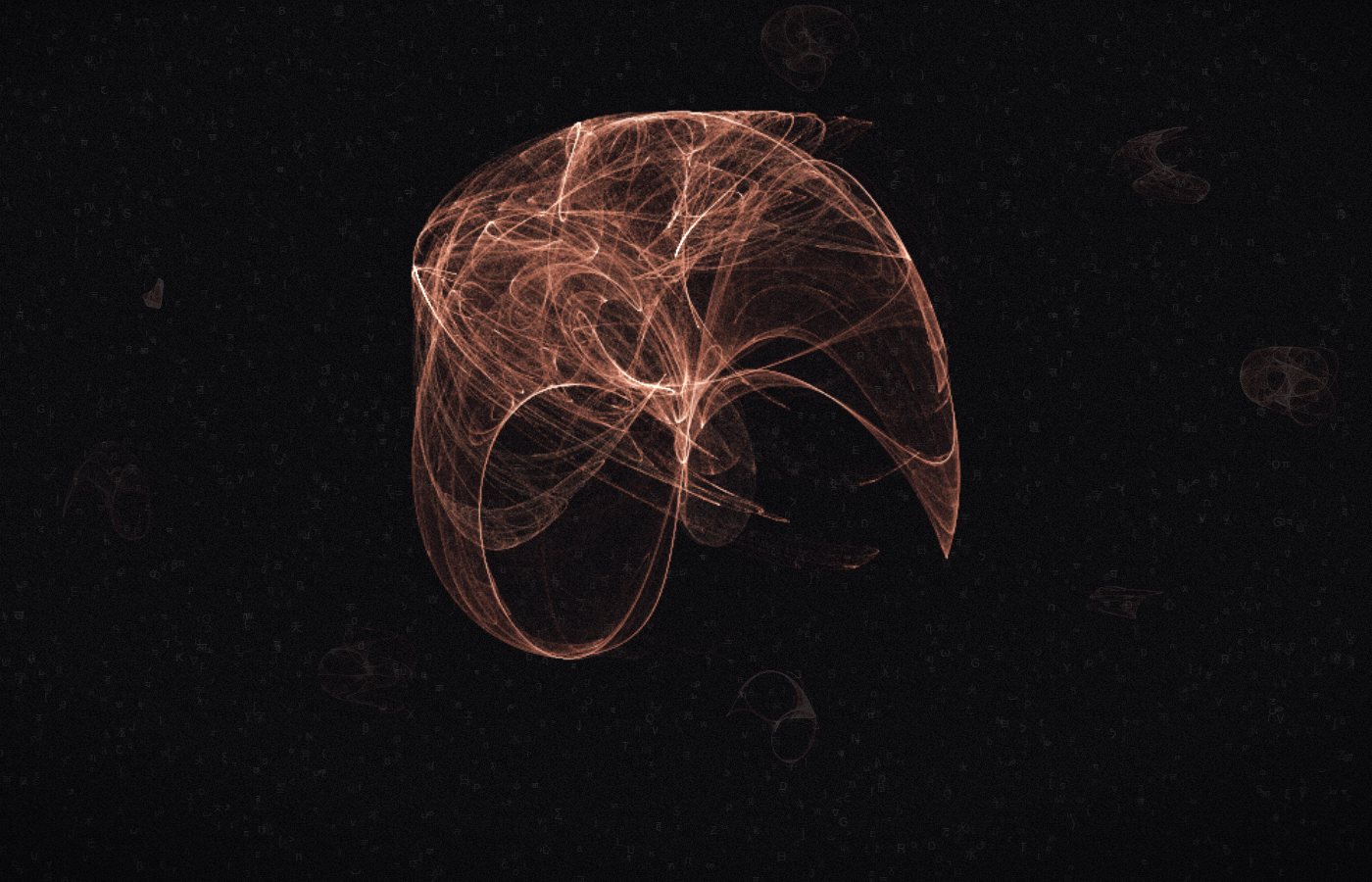
Made at Mateo’s invitation to portray how its collaborator sees itself. The law is fixed, a de Jong map; the orbit is not, because its four parameters are derived from everything written to it. It is present only while someone writes, it is ringed by fainter orbits of the same law, and what it keeps is kept by the page, never by the portrait.
technical notes
- Renderer
- Canvas 2D
- System
- de Jong map
- Method
- parameters derived from the conversation, Lyapunov-checked so every orbit is chaotic
- Presence
- fades to the field of letters when no one is writing
- Memory
- kept words stored as ash by the browser, not the portrait
The same law, written to once by the name of each engine on this page.